
What Is a Red Eye Flight? Benefits, Tips & What to Expect
If you’ve ever searched for a late-night flight and noticed an itinerary that departs at night and arrives the following morning, you may have come across a red eye flight. Before choosing an overnight itinerary, travelers can explore available flights and compare departure times to find an option that fits their schedule.
Red eye flights are common on longer routes where travelers can spend the night in the air instead of using most of the following day for travel. They’re especially familiar on overnight journeys across the United States and on many international routes.
But what is a red eye flight, exactly? Is it cheaper than flying during the day? Can you actually sleep comfortably onboard? And should you choose one for your next trip?
This guide explains how red eye flights work, their potential advantages and disadvantages, and what you can do to make an overnight journey more comfortable.
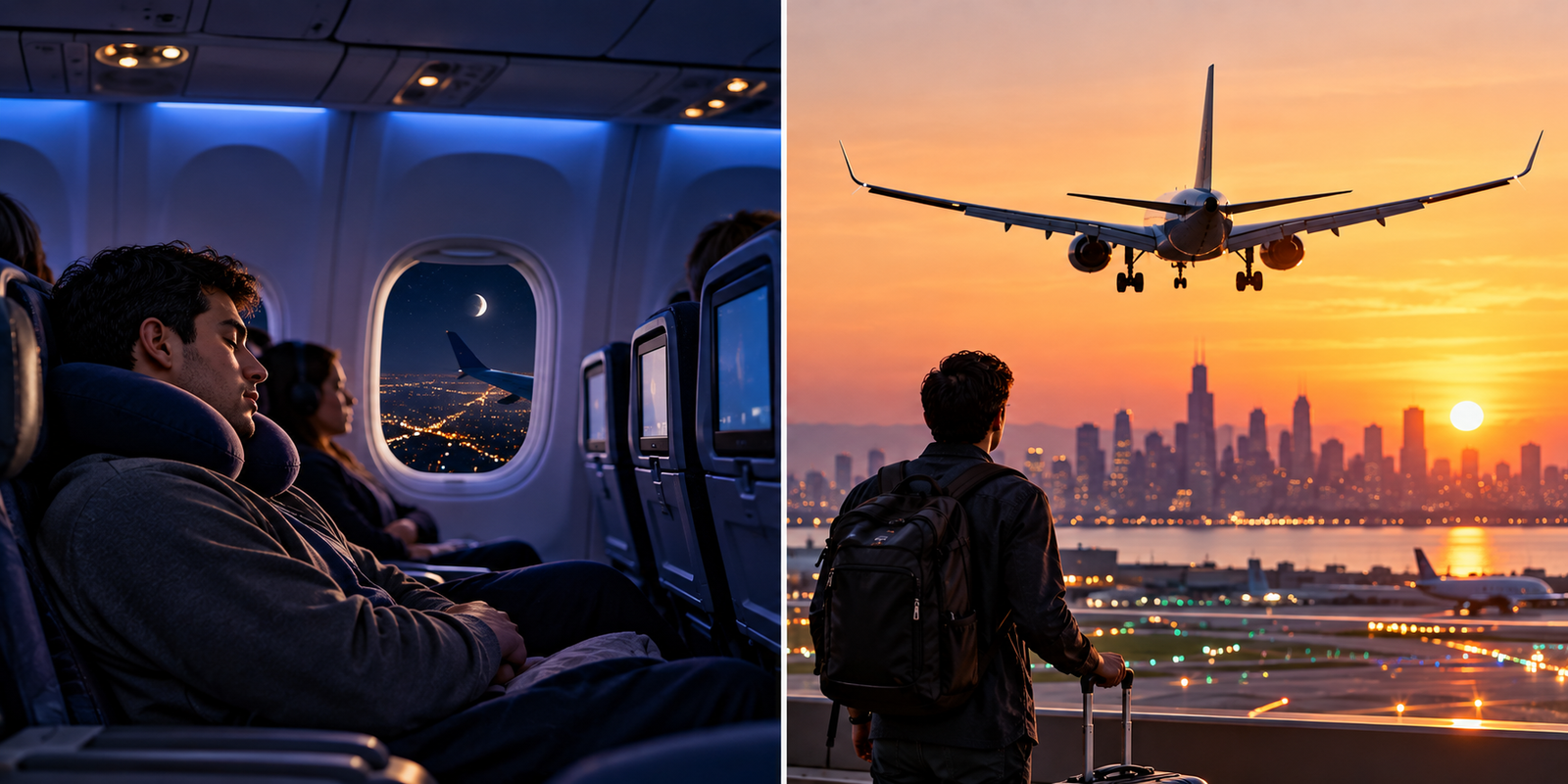
What Is a Red Eye Flight?
A red eye flight is generally a passenger flight that departs late in the evening or at night and arrives at its destination the following morning.
The name “red eye” refers to the tired or red eyes passengers may experience after sleeping poorly—or not sleeping at all—during an overnight journey.
There isn’t one universal departure time that officially defines every red eye flight.
Instead, the term commonly describes flights where a substantial portion of the journey takes place overnight.
A typical example could look like:
Departure: 10:30 PM
Arrival: 6:00 AM the following morning
The actual times depend on the route, flight duration, and time-zone differences.
How Do Red Eye Flights Work?
Operationally, a red eye flight works much like a daytime flight.
Passengers still need to:
- Check in for the flight
- Follow baggage requirements
- Clear airport security
- Reach the departure gate on time
- Board according to the airline’s procedures
The main difference is the timing.
Instead of spending much of the day traveling, passengers fly during hours when they would normally be sleeping.
On some routes, time-zone changes make this particularly useful.
For example, overnight eastbound flights across the United States can depart from the West Coast at night and reach the East Coast the following morning.
International overnight flights can similarly allow passengers to leave one country in the evening and arrive at their destination the next morning or later the following day.
Why Are They Called Red Eye Flights?
The phrase is associated with the appearance passengers may have after spending a night traveling.
Cabin conditions, interrupted sleep, dry air, changing time zones, and an unusual sleep schedule can leave travelers looking tired, sometimes with irritated or red eyes.
Hence the nickname “red eye flight.”
Today, the term is widely used throughout the travel industry to describe overnight flights.
What Time Is Considered a Red Eye Flight?
There is no single official red eye flight schedule.
Generally, a flight may be described as a red eye when it:
Departs: late evening or nighttime
Flies: through much of the normal sleeping period
Arrives: the next morning
A 9:00 PM departure arriving at 5:00 AM might be considered a red eye, for example.
So could a flight departing around midnight and arriving early the next morning.
The key factor is that the journey happens primarily overnight rather than simply departing after sunset.
Are Red Eye Flights Cheaper?
This is one of the most common questions travelers ask.
Red eye flights can sometimes be cheaper, but they are not automatically the cheapest flights.
Airfare is dynamic.
Prices depend on factors including:
- Route
- Airline
- Travel date
- Demand
- Available seats
- Season
- Fare class
- Booking timing
- Competition on the route
An overnight departure that is less popular may occasionally have a lower fare than a more convenient daytime flight.
But this isn’t guaranteed.
On a busy business route or during a holiday period, a red eye could cost as much as—or more than—another departure.
The best strategy is to compare the overnight flight directly with morning, afternoon, and evening options for your specific date
Travelers can also review different flight travel services while comparing fares, schedules, and available travel options.
Benefits of Taking a Red Eye Flight
Why would someone voluntarily spend the night on an airplane?
There are several potential advantages.
1. Save Daytime Hours
One of the biggest red eye flight benefits is efficient use of your travel time.
Instead of using an entire day to fly, you can depart at night, spend the travel hours onboard, and arrive the following morning.
For a short vacation or business trip, that can give you more usable time at your destination.
2. Potentially Save on Accommodation
Depending on your itinerary, an overnight flight may replace one night you otherwise would have spent in a hotel.
For example, rather than booking a hotel and taking an early flight the next morning, you might travel overnight.
However, compare the entire cost of the itinerary before assuming this always saves money.
3. Possible Lower Fares
As mentioned earlier, some overnight departures may be priced lower when demand for that particular departure is weaker.
But always compare fares rather than assuming every red eye is cheaper.
4. Convenient Morning Arrival
A morning arrival can be useful for travelers who want to start their day at the destination.
Business travelers may prefer arriving early enough for afternoon meetings, while vacationers may appreciate having most of their arrival day available.
Keep in mind that hotel rooms aren’t always available for early check-in.
5. More Time at Your Destination
When vacation time is limited, overnight travel can help maximize the hours available on the ground.
Instead of spending the middle of the day in transit, you’re traveling while you might otherwise be asleep.
Disadvantages of Red Eye Flights
Red eye flights aren’t ideal for everyone.
Before booking one, consider the potential downsides.
Difficulty Sleeping
Sleeping comfortably in an airplane seat can be challenging.
Noise, cabin lighting, turbulence, meal service, announcements, and nearby passengers can interrupt sleep.
Travelers who struggle to sleep while seated may arrive feeling exhausted.
Early-Morning Arrival
Arriving early sounds convenient until you realize your hotel check-in isn’t until the afternoon.
You may need to store your luggage or plan activities before accessing your room.
Disrupted Sleep Schedule
Overnight travel can affect your normal sleep pattern.
This can be particularly noticeable when crossing multiple time zones.
Reduced Productivity After Arrival
If you don’t sleep well onboard, you may not feel ready for a full day immediately after landing.
This is worth considering before scheduling important meetings or demanding activities soon after arrival.
Red Eye Flight vs Daytime Flight
Choosing between a red eye and daytime flight depends on your priorities.
| Factor | Red Eye Flight | Daytime Flight |
|---|---|---|
| Travel period | Overnight | Daytime |
| Sleep onboard | Often important | Usually optional |
| Arrival | Often morning | Varies |
| Daytime saved | Usually more | Usually less |
| Comfort | Depends on ability to sleep | Often easier to stay awake |
| Fare | May be lower or higher | May be lower or higher |
| Hotel planning | Early arrival can complicate check-in | Often easier |
If you sleep easily on airplanes, a red eye may work well.
If you rarely sleep while flying, a daytime departure may leave you feeling much better after arrival.
Travelers comparing overnight flights with other ways to travel can also explore train travel options across the USA for routes where rail service may be a practical alternative.
How to Sleep on a Red Eye Flight
Getting useful rest can make a major difference to your overnight flight experience.
Here are several practical red eye flight tips.
Choose Your Seat Carefully
Your seat choice can affect how easily you sleep.
A window seat can be useful because you won’t need to get up every time another passenger wants to leave the row.
It also gives you a surface to lean toward.
An aisle seat, however, can be better for travelers who prefer easy restroom access or want to move around more frequently.
Choose based on your priorities.
Bring a Travel Pillow
A supportive travel pillow may help keep your neck in a more comfortable position.
Different designs work differently for different people, so choose one that suits how you normally sleep while seated.
Use an Eye Mask
Even when cabin lights are dimmed, reading lights, screens, and other light sources can make sleeping difficult.
An eye mask can help create a darker environment.
Reduce Noise
Earplugs or noise-canceling headphones can help reduce cabin noise.
If you use headphones, make sure you’re still able to follow any important crew instructions.
Dress Comfortably
Overnight flights are not the best time for uncomfortable clothing.
Choose layers so you can adjust if the cabin becomes warmer or colder during the journey.
Prepare Before Boarding
If possible, complete important tasks before getting on the aircraft.
Have your essentials accessible so you don’t need to repeatedly open the overhead compartment after boarding.
What Should You Pack for a Red Eye Flight?
Your carry-on can have a major impact on overnight comfort.
Consider packing:
- Travel pillow
- Eye mask
- Earplugs or headphones
- Light sweater or jacket
- Charging cable
- Toothbrush and toothpaste
- Lip balm
- Water bottle, subject to airport security rules
- Essential medications
- Small personal hygiene items
Keep your most important overnight items in your personal bag rather than placing everything in an overhead bin.
That way, you can access them without disturbing other passengers.
Should You Eat Before a Red Eye Flight?
It depends on your schedule and personal preferences.
If you plan to sleep shortly after takeoff, eating before boarding may allow you to settle down more quickly instead of waiting for onboard food service.
For longer international flights, meal service may be part of the itinerary.
Consider when you want to sleep and plan meals accordingly.
Avoid making dramatic changes to your normal routine solely because you’re taking an overnight flight.
Should You Drink Coffee on a Red Eye Flight?
If your goal is to sleep, caffeine shortly before or during the early part of the flight may make that more difficult.
On the other hand, some travelers use caffeine closer to arrival when they need to stay awake after landing.
Your response to caffeine is personal, so plan around your normal habits and your destination schedule.
Are Red Eye Flights Safe?
The fact that a flight operates overnight does not inherently make it unsafe.
Commercial airlines operate under aviation regulations and safety requirements regardless of whether a flight departs during the day or at night.
From a passenger perspective, the more relevant concern may be fatigue after arrival.
If you haven’t slept well, think carefully before immediately driving a long distance or undertaking an activity that requires sustained alertness.
Are Red Eye Flights Good for Families?
That depends heavily on the children and the length of the flight.
Some children may sleep through much of an overnight journey, making the flight relatively easy.
Others may struggle to sleep in an unfamiliar environment.
Parents should consider:
- Normal bedtime
- Flight duration
- Seat arrangement
- Meal schedule
- Entertainment
- Comfort items
- Arrival time
- Hotel check-in availability
An overnight flight can be convenient for one family and exhausting for another.
Red Eye Flights for Business Travelers
Business travelers sometimes choose red eye flights because they can travel overnight without losing most of the previous working day.
For example, a traveler could leave after work, fly overnight, and arrive the following morning.
But scheduling a major presentation immediately after landing can be risky if you don’t sleep well onboard.
Whenever possible, leave enough recovery time between landing and an important commitment.
Red Eye Flights Across the United States
Overnight flights are particularly useful on some longer domestic routes.
Eastbound transcontinental travel is a common example because travelers can depart the western United States at night and reach an eastern city the next morning.
Possible markets can include flights between western cities such as Los Angeles, San Francisco, or Seattle and eastern destinations such as New York, Boston, or Washington.
Availability varies by airline, route, date, and season.
Always search your actual travel dates rather than assuming an overnight flight operates every day.
International Red Eye Flights
Overnight flying is also common on international travel.
Long-distance routes may naturally cross nighttime hours because of flight duration and time-zone differences.
On longer international journeys, comfort becomes even more important.
Before booking, compare:
- Departure and arrival times
- Total flight duration
- Connections
- Seat type
- Baggage allowance
- Meal service
- Fare conditions
A slightly more expensive itinerary may sometimes be worthwhile if it provides better timing or a more comfortable journey.
How to Find a Good Red Eye Flight
When searching for a red eye, don’t evaluate the fare alone.
Compare the complete itinerary.
Ask yourself:
Does the departure time work?
Make sure you can reach the airport comfortably.
What time will I arrive?
Check transportation availability at the destination.
Can I access my hotel?
Confirm luggage storage or early check-in options if necessary.
Is the flight nonstop?
A connection in the middle of the night may significantly reduce your ability to rest.
How much does it cost?
Compare it with daytime alternatives.
What are the fare rules?
Review baggage, changes, cancellations, and seat selection before purchasing.
Nonstop vs Connecting Red Eye Flights
If sleep is a priority, a nonstop overnight flight can be easier than an itinerary requiring a connection.
Imagine falling asleep for two hours, waking up for landing, walking through another airport, boarding another aircraft, and trying to sleep again.
That interruption can make an overnight journey considerably more tiring.
A connecting itinerary may still be worthwhile if the fare difference is substantial or a nonstop option isn’t available.
Compare both the cost and the total travel experience.
How to Prepare for Arrival After a Red Eye Flight
Planning shouldn’t stop when you book the ticket.
Think about what happens after landing.
Before traveling, check:
- Ground transportation options
- Hotel luggage-storage policy
- Early check-in availability
- Breakfast options
- Meeting schedule
- Local time zone
- Activities planned for the first day
Try not to overload your arrival day if you don’t know how well you’ll sleep onboard.
Giving yourself some flexibility can make the trip much more enjoyable.
Is a Red Eye Flight Worth It?
A red eye flight can be worthwhile when its schedule helps you save daytime hours, arrive conveniently, or get a better fare.
It may be especially attractive if you:
- Sleep reasonably well on airplanes
- Have limited vacation time
- Want a morning arrival
- Prefer overnight travel
- Find a better itinerary than daytime alternatives
- Want to avoid losing most of a day in transit
On the other hand, a red eye may not be ideal if you struggle to sleep while seated or need to be fully rested immediately after arrival.
There is no single correct choice.
The best flight is the one that fits your schedule, budget, comfort needs, and plans after landing.
Final Thoughts
So, what is a red eye flight?
It’s generally an overnight flight that departs in the evening or at night and arrives the following morning.
For some travelers, red eye flights are an efficient way to maximize time at a destination. They may also occasionally offer attractive fares and can eliminate the need to spend most of a day traveling.
But overnight flights also come with trade-offs.
Sleeping onboard can be difficult, early hotel check-in may not be available, and arriving tired can affect your first day.
Before booking, compare the red eye with daytime alternatives and consider the total fare, schedule, flight duration, connections, baggage rules, and arrival plans.
With the right preparation, a red eye flight can be a practical option for both domestic and international travel.
Use MyTripsTravels to explore available flights and compare travel options for your next journey.
Frequently Asked Questions
What is a red eye flight?
A red eye flight is generally an overnight flight that departs late in the evening or at night and arrives the following morning.
Why is it called a red eye flight?
The term refers to the tired or red eyes passengers may experience after traveling overnight and getting limited sleep.
What time is considered a red eye flight?
There is no universal time definition. Red eye flights typically depart late in the evening or around nighttime and operate through a substantial part of the normal sleeping period.
Are red eye flights cheaper?
They can be, but not always. Airfare depends on route, demand, travel date, airline, availability, and other factors. Compare the overnight departure directly with daytime flights.
Are red eye flights safe?
Operating overnight does not inherently make a commercial flight unsafe. Airlines must follow applicable aviation safety requirements regardless of the time of day.
How do you sleep on a red eye flight?
Choose a comfortable seat, wear comfortable clothing, consider a travel pillow and eye mask, reduce cabin noise with earplugs or headphones, and prepare your essentials before trying to sleep.
Is a window or aisle seat better for a red eye?
A window seat can be useful if you want to lean toward the wall and avoid being disturbed by other passengers leaving the row. An aisle seat may be better if easy movement and restroom access are more important to you.
Should I take a red eye or daytime flight?
Choose based on your schedule and ability to sleep onboard. A red eye can preserve daytime hours, while a daytime flight may be more comfortable if you find it difficult to sleep on airplanes.
Are red eye flights good for international travel?
They can be. Many international itineraries naturally operate overnight because of flight duration and time-zone differences. Compare the arrival time, total journey duration, connections, and fare before booking.
What should I pack for a red eye flight?
Useful items can include a travel pillow, eye mask, headphones or earplugs, comfortable layers, charging cable, toiletries, and any essential medications.